Screening Forwards: What We Should Actually Hire for Now
Basanite's 5-minute talk at Camp Digital 2026 made a clean argument: technical hiring tests candidates for the skills AI is best at. We should test for the skill AI can't replicate, knowing where the output is wrong.
Five minutes. Part pitch, part provocation. The sharpest argument of the lunchtime lightning round.
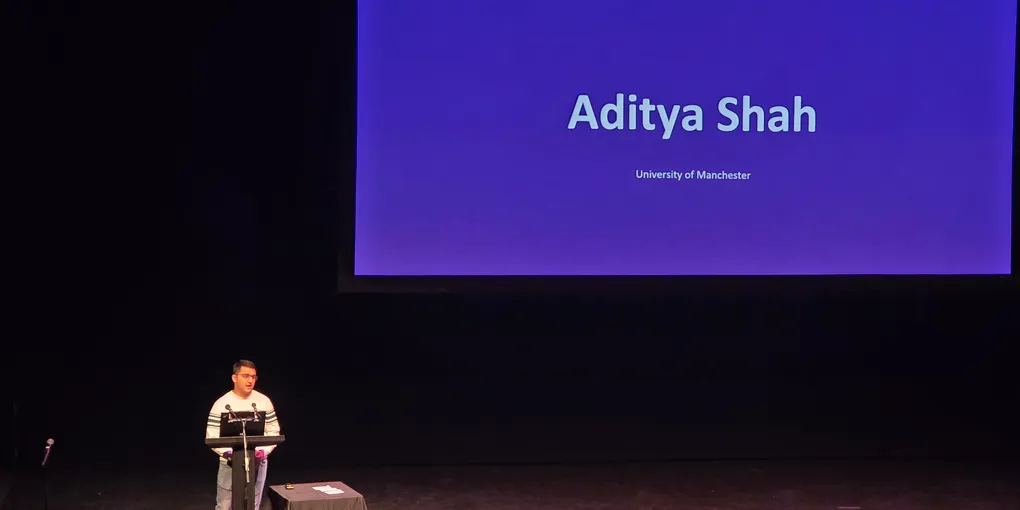
Basanite is a final-year student at the University of Manchester who’s building a startup. He opened with the interview cheat problem. There’s software that runs under the screen-sharing layer during video interviews, feeding candidates real-time AI answers to whatever the interviewer asks. One person used it, got hired, then raised millions in funding. By the end of last year, roughly a third of technical candidates were using some form of AI assistance in interviews.
His point wasn’t really that this is cheating and we should stop it. His point was that it’s a symptom.
The thing that’s actually broken: we’re assessing candidates for skills that AI is better at than humans.
Standard technical hiring tests for memorised frameworks, methods, definitions, syntax. But AI now writes roughly 25% of new code at Google. Designers use Figma AI for flows. Researchers use ChatGPT for personas. We’re testing for what AI is best at, and then being surprised when candidates find ways to use AI to answer.
So what should we be testing for?
He referenced a BCG study of 700+ consultants. One group used AI, one didn’t. The AI-assisted group performed better on tasks that sat within AI’s reliable competence. On tasks just slightly outside that range, the AI-assisted group performed worse, not because AI failed dramatically, but because the consultants couldn’t tell when it was subtly wrong. They trusted the output. They couldn’t feel the edge.
That’s the capability gap no one is measuring: knowing where AI competence ends and when to override it.
A designer who can’t tell when an AI layout suggestion is plausible but wrong ships problems faster. A researcher who can’t spot a hallucinated statistic misleads stakeholders confidently. The dangerous failure mode isn’t AI being obviously broken. It’s AI being confidently wrong and no one catching it.
His argument for what assessment should look like now: don’t ban AI. Require it. Give candidates real domain work and watch what they do with it. When do they question the output? When do they switch approach? Can they spot when something is subtly off?
What you’re actually measuring: judgement under ambiguity, tacit knowledge, the ability to update your position when the output doesn’t feel right. Not recall, not speed. Calibration.
He’s built a product around this. The close was clean:
“We’ve spent 20 years screening backwards. With AI, we need to start screening forwards.”
The version of this argument that applies beyond hiring: if you’re working alongside AI tools in any professional context, the skill that matters isn’t being good at prompting. It’s knowing when to trust the output and when not to. That’s not AI literacy in the abstract. It’s domain expertise applied to AI outputs. You need to know enough about the thing to know when the AI is wrong.
Which is a solid argument for not outsourcing all the thinking.
Basanite presented as part of the 300-second talks at Camp Digital 2026 in Manchester on 7 May 2026.