The Hero Who Hides the Gap: Himal Mandalia at Camp Digital 2026
Himal Mandalia's talk at Camp Digital 2026 reframes burnout not as a personal failure but as a systems problem. The organisation never fixes the gap because someone keeps filling it.
Himal Mandalia gave the talk I’ll be thinking about longest from Camp Digital this year.
The title was Sustainable Intensity or Now to Burn. It’s about burnout. But it’s not a self-care talk. It’s a systems talk. And that reframe is what makes it stick.
The argument goes like this.
Someone in an organisation is good at their job. A gap appears. Something isn’t working, a process is broken, a deadline is at risk. They step in. They compensate. They hold it together through sheer effort and capability.
Their manager notices. Good things happen for them. They’re seen as reliable, resilient, indispensable.
And then it becomes expected.
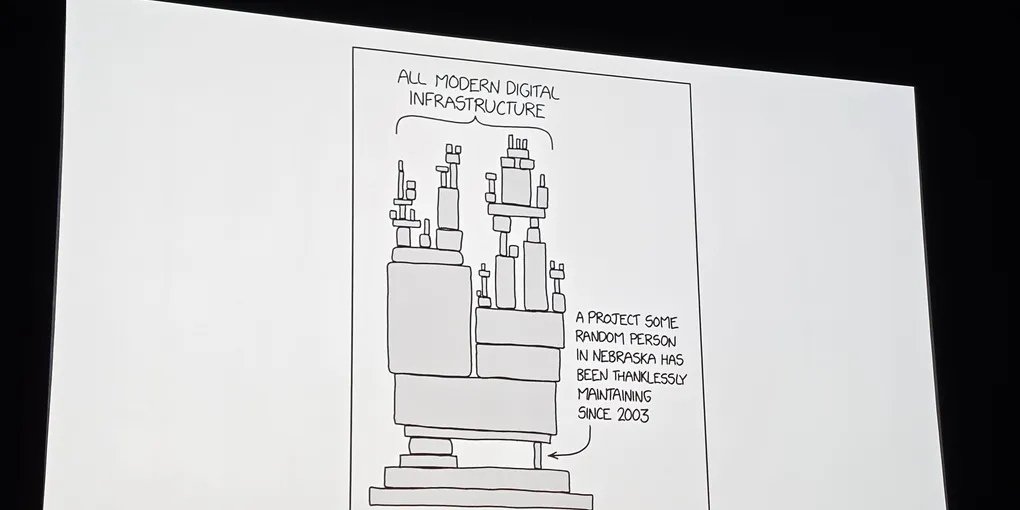
The organisation never actually fixes the underlying gap, because the person has made the gap invisible. The system learns that it doesn’t need to fix this. Someone will step in. Someone always does. The compensating becomes structural. It just isn’t labelled that way.
Eventually the person burns out. Someone else steps in. The whole thing repeats.
Himal’s point is that calling this “resilience” is not a compliment. We celebrate resilient people. We reward them. But what we’re actually doing is incentivising the gap to stay open. We’re not solving the problem. We’re just optimising the patching.
He talked about slack. Not in the project management sense. Slack as unused capacity. The breathing room that lets a team or an organisation actually sense what’s going on. Space to raise questions. Space to notice things early. Space to learn.
When organisations run without slack, the sensing function breaks down. Urgency fills the space where understanding used to be. Heroics look indistinguishable from delivery. People work weekends and it gets read as dedication rather than as a signal that something is structurally wrong.
The organisation keeps moving. It can’t see the problem, because it’s running too fast to look.
He shared a story from about a decade ago. Digital services connected to the prison system. Something broke on a Saturday. He ran across London, got to the office, patched the code, fixed it before Monday’s migration.
He got promoted.
Which gave him more scope to do more heroics.
Eventually he burned out. Took a career break. Went travelling. Except he couldn’t stop. He was sitting in cafes planning the next four weeks of flights, booking the next thing, always moving, always managing. The same mode he’d been in at work, just applied to a different itinerary.
From the outside: an adventure. From the inside: not really there.
You can’t take a career break from yourself.
What got him out of it was learning to sit with the impulse rather than act on it. To notice the pull toward rescuing, fixing, stepping in. To watch what happens if you don’t.
Sometimes nothing. Sometimes the thing collapses. And that, he said, is useful information. If something falls apart the moment you stop holding it, it was already broken. You were just hiding the evidence.
The other thing that changed: he started checking whether the responsibility he was picking up actually matched the authority he had. Carrying responsibility for something you have no structural authority to fix means you can only compensate. You can’t change the conditions. You’re just the patch.
For organisations, the prescription isn’t complicated in theory, just hard in practice.
Standards that protect slack. The ability to hold tension, not suppress it or push through it, but sit with it long enough to understand it. Problems raised earlier. Hard questions about what capacity actually exists before committing to what change will be absorbed.
The question he left the room with: protecting people and delivering change are not competing goals. Set up the conditions where people can sense what’s happening, speak honestly, and match responsibility to authority, and you get delivery that actually sticks. Not heroics. Not burnout. Just clearer.
Sustainable intensity. That middle ground.
A lot of what he described maps directly onto patterns I’ve seen in public sector digital teams. The one capable person holding a critical system together. The unwritten expectation that they’ll always pick it up. The promotion that doubles the scope. I recognise it.
Worth a proper think about which side of that pattern you’re currently on, and whether the organisation around you would even notice if you stopped.
Himal Mandalia spoke at Camp Digital 2026 at the RNCM in Manchester on 7 May 2026.